

Pipe couplings are an important part of many industrial systems. They connect compatible components and help create a complete arrangement for transferring liquids or connecting equipment. Although a coupling may look like a relatively small part of an installation, choosing the correct one requires an understanding of the application, the connection type and the operating conditions.
In industries such as petrochemicals, chemical processing and beverage production, the connection between two components needs to be considered as part of the overall system. A fitting that appears to fit may not be suitable for the material being transferred or the conditions under which the equipment operates.
Understanding the different types of industrial connections can make purchasing decisions easier. It also helps businesses provide suppliers with the right information when sourcing replacement fittings or specifying equipment for a new installation.
Fuel Flex supplies industrial hose solutions and a range of connection fittings for relevant industrial applications. Its product range includes Camlock couplings, converters, breakaway couplers, quick connects and other specialised fittings. Knowing what these components do and what information is needed to select them is a useful starting point for any business working with industrial transfer equipment.
What Are Pipe Couplings?
Pipe couplings are components used to join compatible pipe sections or connect pipework to other parts of a system. Depending on the design, a coupling may form part of a fixed installation or provide a connection that can be disconnected when necessary.
The term is also used more broadly when discussing industrial connection equipment. In these settings, businesses may refer to pipe couplings when looking for fittings that connect pipework, flexible hoses or other transfer components. However, not every fitting described as a coupling serves the same purpose.
Some connections are intended to remain assembled during normal operation. Others are designed to allow equipment to be connected and disconnected as part of a loading, unloading, maintenance or replacement procedure. The choice depends on the design of the system and how it is used.
It is important to distinguish between the connection’s function and its compatibility. A coupling may be intended for a particular type of connection but still be unsuitable for a specific installation because the dimensions, materials or operating requirements do not match.
For this reason, choosing pipe couplings should begin with the requirements of the complete system rather than the name or appearance of an individual fitting.
Why Pipe Couplings Matter in Industrial Systems
Industrial systems often contain several connected components. These may include pipework, flexible hoses, tanks, transfer equipment and other parts that work together to move a product from one point to another.
Each connection needs to suit the components it joins. If a fitting is incorrectly specified, it may not connect properly or may fail to meet the requirements of the intended application.
Connecting compatible components
The basic purpose of a coupling is to provide a connection between components designed to work together. The connection type and dimensions must match the intended arrangement.
A fitting should not be selected on nominal size alone. Two components may share a nominal diameter but use different connection types. In some cases, an appropriate converter may be required. In others, a different fitting or connection arrangement may be necessary.
Confirming the exact connection at each end helps avoid ordering a component that cannot be used as intended.
Supporting fluid-transfer operations
In industrial fluid-transfer systems, connections form part of the route through which a product moves. This means that the suitability of the connection needs to be considered alongside the hose or pipework.
Fuel transfer, chemical handling and other industrial applications can have different requirements. A fitting that is appropriate for one system should not automatically be assumed suitable for another.
The material being transferred, the equipment involved and the operating conditions all need to be considered before selecting a connection.
Making maintenance and replacement more manageable
Some industrial operations use removable connections so that equipment can be disconnected for maintenance, replacement or other operational requirements.
In these cases, the connection type needs to suit the way the system is used. The correct choice depends on the components involved and the requirements of the installation.
Where a fitting is being replaced, identifying the original product and confirming its specifications can make the process more straightforward. Replacing a component with one that merely looks similar is not a reliable way to establish compatibility.
Different Types of Industrial Pipe Couplings and Fittings
Industrial connection products are available in different designs because systems have different requirements. Some fittings are intended for removable connections, while others serve more specialised functions.
Fuel Flex lists several connection products that may be relevant to industrial hose and transfer arrangements. The appropriate choice depends on the specific application and the compatibility of the connected components.
Camlock couplings

Camlock couplings are used for compatible connections where equipment needs to be connected and disconnected. They are one of the fitting types listed in Fuel Flex’s industrial product range.
Fuel Flex lists Camlock types A, B, C, D, E and F, along with dust caps (DC) and dust plugs (DP). The listed materials include aluminium, brass, polypropylene and stainless steel.
Available sizes range from half an inch to four inches, with larger sizes available on request.
When selecting a Camlock coupling, buyers should confirm the required type, nominal size, material and mating connection. The intended application and operating conditions also need to be considered.
It is not enough to ask for a Camlock fitting of a particular size without identifying the connection arrangement. The fitting must correspond to the component it is intended to join.
Converters
Converters are used where a connection arrangement needs to change between compatible fitting types. Their suitability depends on the connections involved and the requirements of the system.
Fuel Flex lists converters among its connection products. Its range also includes Barret converters for changing between 12-tooth and 18-tooth connections.
These products illustrate why identifying the exact fitting is important. A converter should not be chosen simply because it appears to connect two components. The connection types and intended use must be confirmed.
If you are replacing an existing fitting, record the details of both ends of the connection. Providing photographs, measurements and any available product markings can help with identification, but the final selection should be checked against the relevant specifications.
Breakaway couplers
Breakaway couplers are specialised connection components used in certain transfer arrangements. The purpose and operating characteristics of an individual product depend on its design and manufacturer specifications.
Fuel Flex lists Break Away Couplers as part of its product range. Businesses considering this type of fitting should confirm the intended application, connection requirements and product-specific operating limits before specifying it.
A general product name does not establish that every breakaway coupler is suitable for every transfer system. The selected product needs to match the requirements of the installation.
Quick connects
Quick connects are used in connection arrangements designed to allow components to be connected and disconnected according to the product’s intended use.
Fuel Flex lists Quick Connects among its fittings. As with other connection products, buyers need to identify the specific connection type and confirm that it is suitable for the intended application.
The term quick connect covers a category of products rather than one universal connection. Different designs should not be treated as interchangeable without checking their specifications.
Other specialised fittings
Some industrial systems require connection components that serve a more specific purpose than a standard coupling.
Fuel Flex’s listed range includes nozzles, gravity drop couplers, bespoke end couplers, stainless-steel shanks, brass foot pieces, Storz couplers, half and safety clamps, sight glasses, rubber bellows and hammer lug unions.
These products have different functions within industrial equipment. The correct component depends on the design of the system and the connection requirement being addressed.
Where an installation includes several fitting types, documenting the arrangement can help ensure that each component is specified correctly.
How to Choose Pipe Couplings for Your Application
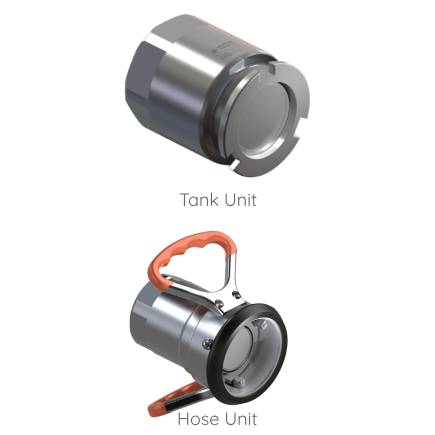
Choosing pipe couplings starts with understanding what the connection needs to do. A systematic approach helps identify the relevant specifications before a purchase is made.
1. Identify the connection points
Start by establishing which components need to be joined. Is the fitting connecting two pipe sections, connecting a pipe to a hose or joining a hose to a piece of equipment?
The answer helps establish the type of connection required. It also helps clarify whether the system needs a particular coupling, a converter or another type of fitting.
2. Confirm the size and connection type
Record the nominal size and connection type at each end. Do not assume that components with matching nominal sizes will connect directly.
If the connection uses a particular fitting design or manufacturer-specific arrangement, include that information in the enquiry.
When replacing an existing coupling, the details of the current fitting can provide a useful starting point. However, the replacement still needs to be checked against the application and operating requirements.
3. Identify the transferred material
The product moving through the system is an important part of the specification. Fuel, chemicals, water and beverage-related products may have different equipment requirements.
The compatibility of the fitting and any relevant sealing materials must be confirmed for the intended service. It should not be assumed that a fitting suitable for one product will automatically be appropriate for another.
For chemical transfer, identify the specific chemical or mixture and consult the relevant compatibility information.
4. Confirm operating pressure and temperature
Pressure and temperature can affect the suitability of a connection. The fitting must be appropriate for the system’s operating conditions, as established by the relevant product specifications.
The pressure rating of one component should not be used as proof that the entire assembly is suitable. The connected hose, coupling and other relevant components must be considered together.
If the operating requirements are uncertain, confirm them with the equipment manufacturer or an appropriate technical supplier before choosing the fitting.
5. Consider how the connection will be used
A system that requires frequent disconnection may have different connection needs from one that is intended to remain assembled.
Consider the normal operating procedure, how equipment is maintained and whether the fitting needs to connect with existing equipment. This information helps determine which connection types are worth considering.
6. Check the manufacturer’s specifications
Once the basic requirements are established, check the relevant product information. This should confirm the connection type, dimensions, material and applicable operating limits.
If the documentation does not provide enough information to establish suitability, seek clarification rather than making assumptions.
Pipe Couplings for Fuel Transfer Systems

Fuel-transfer systems can include pipework, flexible hoses and equipment used to load or unload products. The connection requirements depend on the particular installation and the components being joined.
When specifying pipe couplings for these systems, identify the connection point first. The fitting required between a pipe and a flexible hose may differ from the fitting needed between two other components.
The next step is to confirm the existing connection type and size. Where a particular fitting standard or connection arrangement is used, provide those details when requesting a replacement or new component.
The intended product and operating conditions must also be stated. A coupling should be selected according to its suitability for the application rather than its appearance or nominal size alone.
Fuel Flex supplies industrial hose solutions for relevant petrochemical applications and lists a range of hose connection fittings. Its product range includes Camlock couplings, converters, breakaway couplers and other specialised components.
For a new installation or replacement, the most useful enquiry includes details of the connected equipment, the required connection arrangement and any relevant technical specifications. This gives the supplier a clearer basis for identifying potential options.
Pipe Couplings for Chemical Transfer
Chemical-transfer systems require particular attention to the compatibility of materials in contact with the product. The chemical involved, its concentration where relevant and the operating conditions can influence equipment selection.
A coupling should therefore be considered as part of the complete transfer assembly. Confirming that a hose is suitable for a particular chemical does not automatically establish that every fitting or sealing material connected to it is suitable as well.
Before selecting pipe couplings for chemical applications, establish the exact product being transferred and consult the relevant manufacturer information. Where the compatibility of a component is uncertain, obtain technical confirmation before proceeding.
Fuel Flex supplies composite and rubber hose options for specified industrial applications, including chemical transfer. However, the correct hose and connection arrangement must be established for the particular service.
This is especially important when an installation is being modified or when a component is being replaced with a different material or design. The replacement should be assessed against the full set of application requirements rather than treated as a like-for-like alternative without verification.
Why Material Selection Matters
Industrial couplings are available in different materials to suit different equipment and application requirements. Fuel Flex lists aluminium, brass, polypropylene and stainless steel Camlock fittings.
The availability of several materials gives buyers options, but it does not mean that every material is suitable for every application.
Aluminium fittings | pipe couplings
Aluminium is one of the materials available in Fuel Flex’s listed Camlock range. Whether a particular aluminium fitting is suitable depends on its specifications and the intended operating conditions.
Brass fittings | pipe couplings
Brass is another listed option. The particular product and its compatibility with the transferred material should be confirmed before use.
Polypropylene fittings | pipe couplings
Polypropylene Camlock fittings are also listed in the range. Buyers should check the specifications of the individual fitting, including its suitability for the product and operating conditions.
Stainless steel fittings | pipe couplings
Stainless steel options are available as well. Where a particular grade or specification is required, this should be confirmed for the actual product rather than assumed from the general material description.
The best way to approach material selection is to start with the application and use the manufacturer’s technical information to confirm suitability. Material names alone do not provide enough information to establish that a coupling is appropriate for a particular service.
Understanding Pipe Couplings and Hose Connections
Pipework and flexible hoses serve different roles in industrial systems, but both may form part of the same transfer arrangement.
Pipework provides a route through which a product moves, while flexible hoses can provide connections where movement or a flexible section is needed. The fitting connects components according to the design of the system.
Fuel Flex’s industrial hose range includes composite hoses, rubber hoses and high-pressure hoses intended for specified applications. These hose types differ in construction and intended use, so the connection requirements must be assessed for the particular assembly.
A coupling suitable for one hose should not automatically be assumed suitable for another. The dimensions, connection type and operating requirements must be confirmed.
It is also important to remember that the rating of a hose does not automatically establish the rating of the assembled connection. The complete assembly must be suitable for the intended operating conditions, and the relevant product specifications should be followed.
When requesting a replacement fitting, provide information about both the coupling and the hose or pipework it connects to. This helps ensure that the proposed component is considered in the context of the complete system.
Inspecting and Maintaining Industrial Connections
The maintenance requirements for industrial connections depend on the equipment, application and manufacturer’s recommendations. Connections should be included in the relevant inspection procedures for the system.
A visual inspection may identify obvious damage or deterioration, but appearance alone cannot establish the condition or suitability of every component.
For hose assemblies, the inspection process may include checking the outer hose surface and end fittings. Depending on the application and inspection procedure, internal inspection may also be appropriate.
Fuel Flex offers hose management services that include inspection, maintenance, pressure testing and recertification. Its inspection process can include checking the outer hose carcass and end fittings as well as borescope inspection of the hose interior where appropriate.
Its testing services include pressure testing against original equipment manufacturer specifications, with chart recorders used to record pressure and time during testing.
These services support hose assembly management, but a hose test should not automatically be interpreted as verification of every separate fitting or the entire installation. The correct inspection and testing procedure depends on the equipment and the applicable requirements.
Where damage is identified or the condition of a component is uncertain, follow the relevant manufacturer’s guidance and site maintenance procedures before returning the equipment to service.
Common Mistakes When Selecting Pipe Couplings
A few recurring mistakes can make it harder to choose the right connection.
Selecting a coupling based only on nominal size
Nominal size is important, but the connection type and configuration also need to match. Two fittings with the same nominal size may not connect directly.
Assuming similar-looking fittings are interchangeable
Fittings can look similar while having different connection arrangements or specifications. Confirm the actual product details before ordering.
Overlooking material compatibility
The suitability of a fitting depends partly on the product being transferred and the operating conditions. Do not assume a component is appropriate for a new application simply because it was used elsewhere.
Ignoring the complete assembly
A coupling forms part of a wider system. Its suitability must be considered alongside the hose, pipework and connected equipment.
Failing to provide enough information
A request that only states a nominal size may leave important questions unanswered. Providing the application, connection type and operating requirements helps establish which products may be suitable.
Treating every fitting as a standard product
Some systems require specialised fittings or a particular connection arrangement. If the installation uses a specific product or standard, provide that information rather than requesting a generic replacement.
Information to Provide When Ordering Pipe Couplings
A clear specification helps suppliers understand what is required. Before requesting a quotation, gather the details available about the connection and its intended use.
Useful information includes:
- Application: Explain where the coupling will be used and what components it needs to connect.
- Transferred material: Identify the fuel, chemical, water or other product involved.
- Connection type: Describe the fitting type at each end.
- Nominal size: Provide the size of the connection and any relevant measurements.
- Material requirements: State any known requirements for the fitting material.
- Operating conditions: Include the relevant pressure and temperature information.
- Existing product details: Provide manufacturer information or a product code if available.
- Special requirements: Include applicable standards, site requirements or other technical specifications.
Photographs can help identify an existing fitting, particularly when markings are difficult to read. Measurements and product documentation should be used to support identification and technical confirmation.
If you do not know the connection type, explain what is known about the system and ask for help identifying the fitting. It is better to clarify an unknown specification than to guess and risk ordering an incompatible component.
How Fuel Flex Supports Industrial Hose and Connection Requirements
Fuel Flex supplies industrial hose solutions for the petrochemical and beverage industries. Its product range includes composite hoses, rubber hoses and high-pressure hoses, alongside connection fittings for relevant applications.
The listed fitting range includes Camlock couplings, converters, breakaway couplers, quick connects and other specialised components. Each product has its own intended use and specifications, so the correct selection depends on the requirements of the system.
Fuel Flex also provides hose management services that include inspection, maintenance, pressure testing and recertification. These services support businesses that need to manage industrial hose assemblies in accordance with the relevant specifications and procedures.
When sourcing pipe couplings, it is helpful to start with a clear description of the application and the connection arrangement. Details about the transferred material, dimensions and operating conditions provide a practical basis for identifying suitable options.
To learn more about Fuel Flex’s industrial hose products and services, visit the Fuel Flex website.
Frequently Asked Questions About Pipe Couplings
What are pipe couplings used for?
Pipe couplings join compatible pipe couplings sections or connect pipework to other components within a system. In industrial environments, related fittings may also connect flexible hoses to equipment. The correct type depends on the connection arrangement and the requirements of the installation.
Are pipe couplings and hose couplings interchangeable?
Not automatically. pipe couplings and hose connections can use different designs and specifications. Before choosing a fitting, confirm the connection type, dimensions and compatibility of the components being joined.
What types of pipe couplings does Fuel Flex list?
Fuel Flex lists Camlock couplings, converters, breakaway couplers, quick connects and other specialised connection fittings. The correct option depends on the intended application and the product specifications.
Which material should I choose for a pipe coupling?
The material should be selected according to the transferred product, operating conditions and manufacturer’s specifications. Fuel Flex’s listed Camlock range includes aluminium, brass, polypropylene and stainless steel options.
Can one coupling be used for different fluids?
A coupling should not be assumed suitable for different fluids without checking its specifications. Material compatibility and operating requirements need to be confirmed for each intended application.
How can I identify an existing coupling?
Look for manufacturer markings, product codes and connection details. Record the dimensions and take clear photographs if necessary. These details can help a supplier identify the product, but the replacement must still be checked for compatibility.
Do industrial couplings need regular inspection?
Inspection requirements depend on the fitting, the system and the manufacturer’s guidance. Connections should be considered within the maintenance procedures appropriate to the installation. Hose assemblies may require inspection of both the hose and its end fittings.
What is the difference between a coupling and a converter?
A coupling generally provides a connection between compatible components. A converter is used where the connection arrangement needs to change between specified fitting types. The suitability of either product depends on the actual connections and the requirements of the system.
Making a Better-Informed Choice
Pipe couplings are a small but important part of industrial fluid-transfer systems. Choosing the right component means understanding the connection type, confirming the dimensions, checking material compatibility and considering the operating conditions.
Camlock couplings, converters, breakaway couplers and quick connects each serve different purposes. They should be selected according to the requirements of the particular installation rather than treated as interchangeable options.
For businesses specifying new equipment or replacing existing fittings, accurate information is the best starting point. Confirming the connection arrangement and checking the relevant technical specifications helps narrow down the options and avoid unnecessary guesswork.
Fuel Flex provides industrial hose solutions and connection fittings for relevant petrochemical and beverage applications. Visit fuelflex.co.za to explore its range and services.