
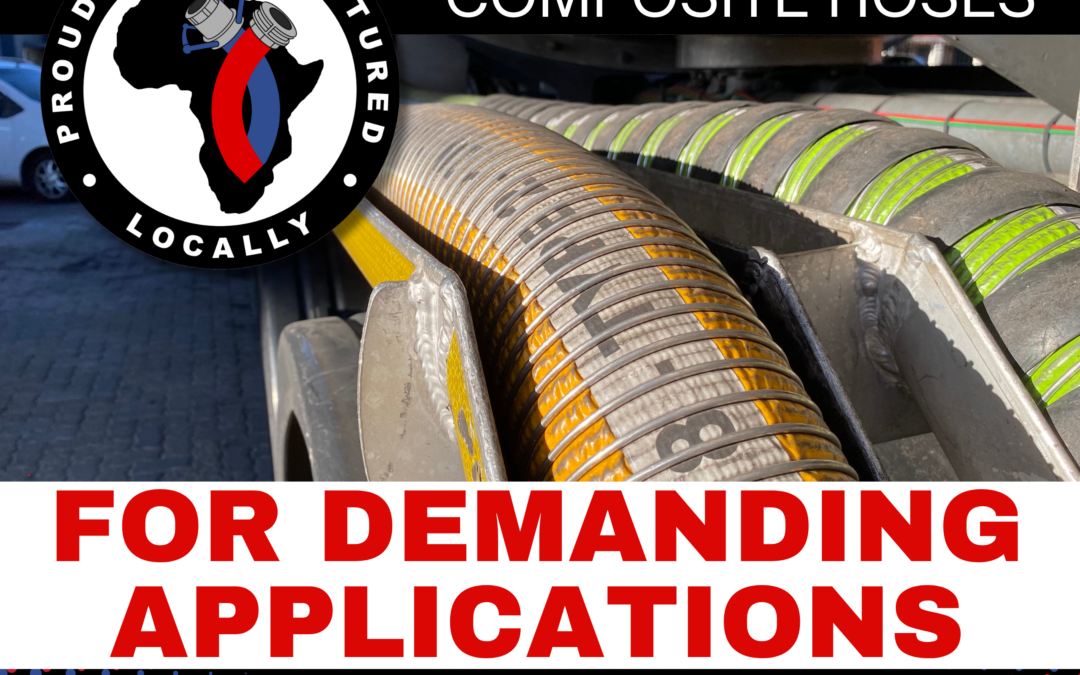
When transferring fuels, chemicals and vapours in demanding industrial environments, choosing the correct hose is an important part of maintaining a reliable transfer system. Hose construction, working pressure, size and the requirements of the application all need to be considered before selecting a product.
Fuel Flex supplies EN certified composite hoses for demanding fluid transfer applications, including fuel loading and offloading, chemical industry applications, loading arm applications and vapour recovery.
The company’s EN 13765 composite hose range provides different construction options for applications where a flexible and reliable transfer hose is required.
What Are EN Certified Composite Hoses?
EN certified composite hoses are constructed from multiple layers rather than relying on a single hose material. Their construction provides a flexible solution for applications where fluids and vapours need to be transferred between equipment.
For Fuel Flex, the EN-certified composite hose range is manufactured to EN 13765.
The range includes three constructions:
- AAPH
- GAPH
- GGPP
The appropriate construction should be selected according to the requirements of the application.
EN 13765 Composite Hoses – EN certified composite hoses
Fuel Flex’s EN 13765 composite hoses are designed for applications including:
- Fuel loading and offloading
- Chemical industry applications
- Loading arm applications
- Vapour recovery
The hoses are available in diameters from 1 inch to 6 inches, with working pressures of 10/14 Bar (150/225 PSI) and maximum coil lengths of up to 15 metres.
These specifications provide customers with options for different transfer requirements while maintaining the relevant EN 13765 standard.
EN certified composite hoses for Fuel Transfer
Fuel transfer applications can involve the movement of petroleum products between storage, transport and dispensing equipment.
A hose used in these applications needs to be suitable for the intended product and operating conditions.
Fuel Flex supplies EN 13765 composite hoses for fuel loading and offloading, providing a flexible hose option for these transfer applications.
The correct hose construction, diameter and operating specifications should always be considered when selecting a hose for a fuel transfer system.
EN certified composite hoses for Chemical Applications
Composite hoses are also used in chemical transfer applications.
Fuel Flex’s EN 13765 range includes hoses intended for chemical industry applications.
Chemical compatibility is an important consideration when selecting any hose used for chemical transfer. The hose must be appropriate for the specific product being transferred and the conditions under which the transfer takes place.
This makes correct hose selection an important part of planning and maintaining a chemical transfer system.
EN certified composite hoses for Vapour Recovery
Fuel Flex’s EN 13765 composite hoses can also be used in vapour recovery applications.
Vapour transfer has different requirements from liquid transfer, making application-specific hose selection important.
The correct hose needs to be selected according to the system requirements and the intended use.
EN certified composite hoses for Loading Arms
Loading arms are used to facilitate the transfer of liquids between storage systems, tankers and other equipment.
Fuel Flex supplies EN 13765 composite hoses for loading arm applications, providing a flexible connection option where required.
With available diameters from 1 inch to 6 inches and maximum coil lengths of 15 metres, the range provides different options depending on the requirements of the installation.
Understanding the Hose Construction
Fuel Flex’s EN 13765 composite hose range includes three constructions:
AAPH
AAPH is one of the EN 13765 composite hose constructions available from Fuel Flex.
GAPH
GAPH is another construction within the EN 13765 composite hose range.
GGPP
GGPP completes the three EN 13765 composite hose constructions supplied by Fuel Flex.
The appropriate construction should be selected according to the specific application and technical requirements.
Hose Size and Working Pressure
Selecting the correct size and pressure rating is an important part of choosing a composite hose.
Fuel Flex’s EN 13765 composite hoses are available from:
1 inch to 6 inches
The working pressure specifications are:
10/14 Bar
or:
150/225 PSI
Maximum coil lengths are:
Up to 15 metres
These specifications should always be checked against the requirements of the intended installation before a hose is selected.
Why Correct Hose Selection Matters
There is no single hose that is automatically suitable for every application.
Fuel transfer, chemical transfer, vapour recovery and loading arm applications can have different requirements.
When selecting an EN certified composite hose, businesses should consider:
- What product is being transferred
- Whether the application involves liquid or vapour
- Required hose diameter
- Working pressure
- Required hose length
- Connection requirements
- Operating conditions
- The applicable hose construction
Considering these factors helps ensure that the selected hose is appropriate for its intended application.
Hose Inspection and Maintenance for EN certified composite hoses
Selecting an appropriate hose is only part of managing hose equipment.
Regular inspection and maintenance can help businesses monitor hose condition throughout its service life.
Fuel Flex provides hose management services including:
- Inspection
- Maintenance
- Borescope inspection
- Pressure testing
- Recertification
These services provide additional support after the initial hose supply.
Inspecting EN certified composite hoses
Fuel Flex’s inspection services include visual inspection of the outer carcass and inspection of hose end fittings.
The company also provides borescope camera inspection to identify potential damage inside the hose.
These inspection services can provide useful information about the condition of hose equipment and help determine whether further maintenance or testing is required.
Pressure Testing and Recertification
Fuel Flex also provides pressure testing and recertification services.
Hoses are pressure tested according to OEM specifications, with chart recorders used to record pressure and time during testing.
This provides a documented record of the testing performed as part of the recertification process.
Mobile Hose Testing
Fuel Flex’s mobile test trailers provide on-site hose testing and maintenance services.
The mobile service can accommodate hoses from ½ inch to 12 inches, with testing pressures of up to 21,500 psi.
The trailers are equipped with spare parts for composite and rubber hoses, dry-break systems, API couplers and exchange units.
This allows Fuel Flex to provide hose testing and maintenance support at customer locations where required.
Application Engineering Support
Fuel Flex does more than supply hoses.
The company offers application engineering services to support customers with hose testing, inspection, maintenance and recertification requirements.
Understanding the application is an important part of selecting the correct composite hose.
Fuel Flex can therefore support customers with both the initial hose requirement and ongoing hose management.
A Practical Composite Hose Solution
EN 13765 composite hoses provide a flexible option for a range of demanding transfer applications.
Fuel Flex supplies the range for fuel loading and offloading, chemical industry applications, loading arm applications and vapour recovery.
With three available constructions, sizes from 1 inch to 6 inches and maximum coil lengths of up to 15 metres, the range provides options for different application requirements.
Fuel Flex EN Certified Composite Hoses
Fuel Flex’s EN certified composite hose offering is focused specifically on the EN 13765 range.
This includes:
- AAPH composite hoses
- GAPH composite hoses
- GGPP composite hoses
The range covers applications involving fuel, chemicals and vapour transfer, as well as loading arm applications.
Customers can also access Fuel Flex’s wider hose management services, including inspection, maintenance, pressure testing and recertification.
Conclusion
Choosing the correct EN certified composite hoses is an important consideration when transferring fuel, chemicals and vapours in demanding environments.
Fuel Flex supplies EN 13765 composite hoses in AAPH, GAPH and GGPP constructions, with sizes from 1 inch to 6 inches, working pressures of 10/14 Bar (150/225 PSI) and maximum coil lengths of up to 15 metres.
The hoses are used for fuel loading and offloading, chemical industry applications, loading arm applications and vapour recovery.
Beyond supplying composite hoses, Fuel Flex also provides inspection, maintenance, testing and recertification services to support customers throughout the working life of their hose equipment.
For businesses requiring EN certified composite hoses for demanding transfer applications, Fuel Flex provides specialist hose solutions backed by technical and hose management support.